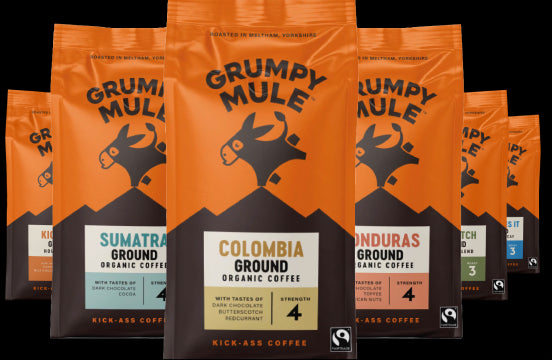


If you want great coffee, you’ve got to start with great coffee beans. Simple as. These little fellas carry all the flavour, aroma, and oomph that end up in your cup - whether you’re slurping a flat white, tinkering with cold brew, or just trying to wake up before 9am. Here’s the Mule’s straight-talking guide to what they are, how they taste, and how to pick a bag worth brewing.
What exactly are coffee beans?
Despite the name, coffee beans aren’t beans at all. They’re the roasted seeds hidden inside coffee cherries - bright red fruit (sometimes yellow or green) grown on trees across the tropics. Each cherry usually holds two seeds, unless it’s a little oddball “peaberry” and only 1 seed grows.
They’re picked, processed, dried, roasted, and (if you like life easy) ground - then hoofed into your kitchen so you can get on with brewing.

Types of coffee beans (aka the characters in your cup)
There are 125 coffee species, but only two hog the spotlight.
Arabica
- Smooth, complex, sweet
- Less bitter, loved pretty much everywhere
- Grows high up hillsides
Robusta
- More bitter, less acidic
- Packs more caffeine
- More often used in espresso blends (but the Mule’s doesn’t)
Roast levels - the colour that changes everything
Roasting is where the magic - or mayhem - happens. Same bean, totally different taste depending on how hot and how long it’s roasted.
- Light roast Bright, delicate, fruit-forward. All the bean’s natural personality.
- Medium roast Balanced, smooth, often nutty or caramelly. Crowd-pleaser territory.
- Dark roast Bold, smoky, rich, lower acidity - the deeper, duskier end of the flavour pool.

Whole beans vs ground
Whole beans
- Fresher for longer
- Need a grinder
- Let you control the grind, and therefore the brew
Ground coffee
- Quick and convenient
- Loses freshness faster
- Ideal if you don’t fancy faffing with a grinder before sunrise

How to store your coffee beans without ruining them
- Airtight, opaque container (sunlight is not your friend)
- Cool, dry cupboard
- Keep them away from heat, moisture, and nosy pets
How to choose the right beans for you
- Check the roast date - freshness matters
-
Know your flavour vibes:
- Light = fruity + floral
- Medium = nutty + smooth
- Dark = bold + smoky
-
Think about origin:
- Africa = bright, floral, citrus
- South America = chocolate, nuts, sweetness
- Asia = earthy, spicy, deep
-
Experiment in small batches - life’s too short to stick to one bean forever

Fun facts (for showing off later)
-
Goats discovered coffee.
Well… sort of. Legend has it an Ethiopian goat herder noticed his goats getting a bit lively after munching on coffee cherries. Curious hooves started there. -
A coffee tree takes 3–4 years to bear fruit.
(2-3 is the absolute minimum in ideal conditions; 3-4 is the norm.) Worth the wait - those cherries don’t rush for anyone. -
Caffeine is Mother Nature’s pest control.
It helps protect the plant, which is why robusta tends to be tougher and more pest-resilient than arabica. -
There’s no such thing as an “espresso bean.”
It’s the same coffee - just roasted, blended, and ground to behave nicely under pressure.
In short
Your coffee beans impact the flavour, the body, the aroma, the whole shebang. Learn what you like, try a few roasts, store them properly, and brew with beans that do right by your taste buds. The Mule approves.
Fancy brewing with better beans?
If all this bean talk has got your kettle twitching, the Mule’s got a stable full of good ones. Our Grumpy Mule coffee beans are packed with flavour and ready for whatever brew method you’ve got up your sleeve.
Take a wander through the range and find a bean that suits your mug.


